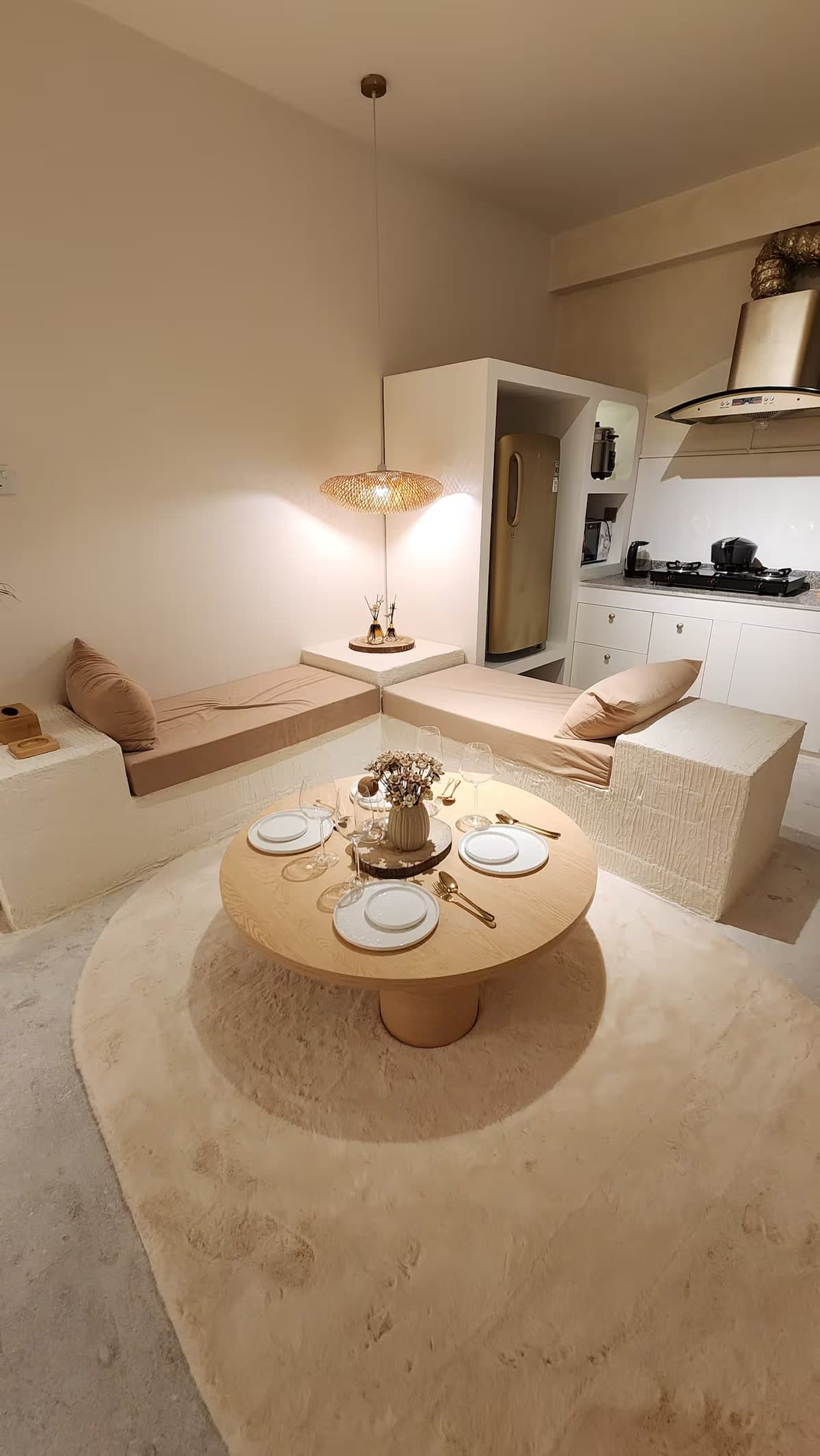
experiences.
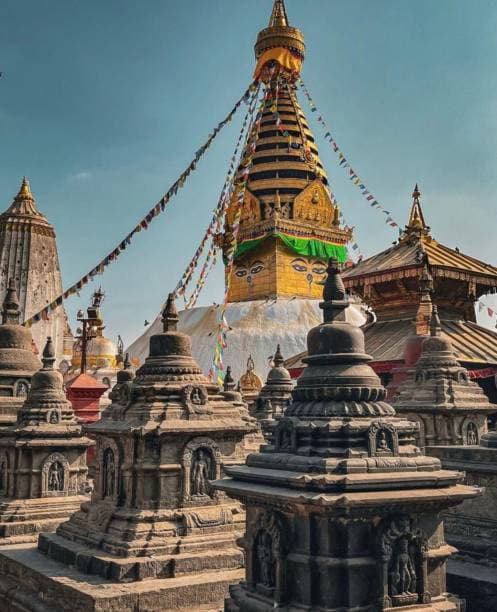
the stupa.
Swayambhunath sits on its wooded hill just above Lagom. The name means "self-arisen": legend says the valley was once a lake, a lotus bloomed on its surface with a light that never went out, and the bodhisattva Manjushri cut the hills with his sword to drain the water so people could worship it. An inscription dated 640 CE already records work here by the Licchavi kings, which makes it the oldest stupa in Nepal and part of the Kathmandu Valley UNESCO World Heritage Site.
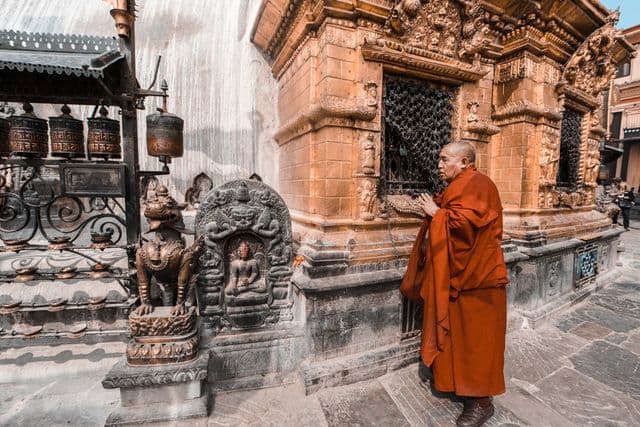
Climb the 365 stone steps on the east side at dawn, when monks and neighbours walk the stupa clockwise, spin the brass prayer wheels and light butter lamps. The white dome is topped by a gilded cube with the Buddha's eyes looking out in the four directions, and thirteen golden rings for the thirteen stages to enlightenment. The dome was re-gilded with 20 kg of gold in 2010; the Anantapur shrine, destroyed in the 2015 earthquake, has since been rebuilt.
And yes, the monkeys. Families of rhesus macaques live on the hill and gave the place its nickname. They are harmless if you keep food, sunglasses and anything shiny out of sight.
on the hill
The great vajra
A huge bronze thunderbolt on a mandala base greets you at the top of the staircase, with the stupa rising behind it.
Harati (Ajima) temple
A two-tiered gilded Newari temple to the goddess who protects children, the busiest shrine on the hill. No photos in front of the deity; the sides are fine.
Shantipur
A plain, 1,500-year-old shrine said to hold the tantric master Shantikar Acharya, still meditating inside. A poem by King Pratap Malla is inscribed on the wall.
Pratappur and Anantapur
The two tall white shikhara towers built by Pratap Malla in the 17th century. Anantapur fell in 2015 and stands again.
Karma Raja Mahavihar
The Karma Kagyu monastery on the platform. Drop in quietly for the morning or late-afternoon puja, when the monks chant to drums and horns.
Dewa Dharma and Dharmachakra monasteries
Two smaller, quieter gompas: Dewa Dharma with its bronze Buddha and murals, and the 19th-century Bhutanese Drukpa Kagyu gompa near the Harati temple.
Stupa museum
A small red-brick hall of Buddhist bronzes and stone sculpture, easy to miss and worth ten minutes.
World Peace Pond
Toss a coin into the bowl of the standing Buddha for luck, then keep going into the little forest behind for the quietest corner of the hill.
Singing-bowl lanes
Workshops and stalls selling singing bowls, thangka paintings, prayer flags and mala beads. Bargain gently; opening prices run high.
The view
The whole valley spreads below you. In autumn and winter the Ganesh Himal and Langtang ranges show above the northern rim.
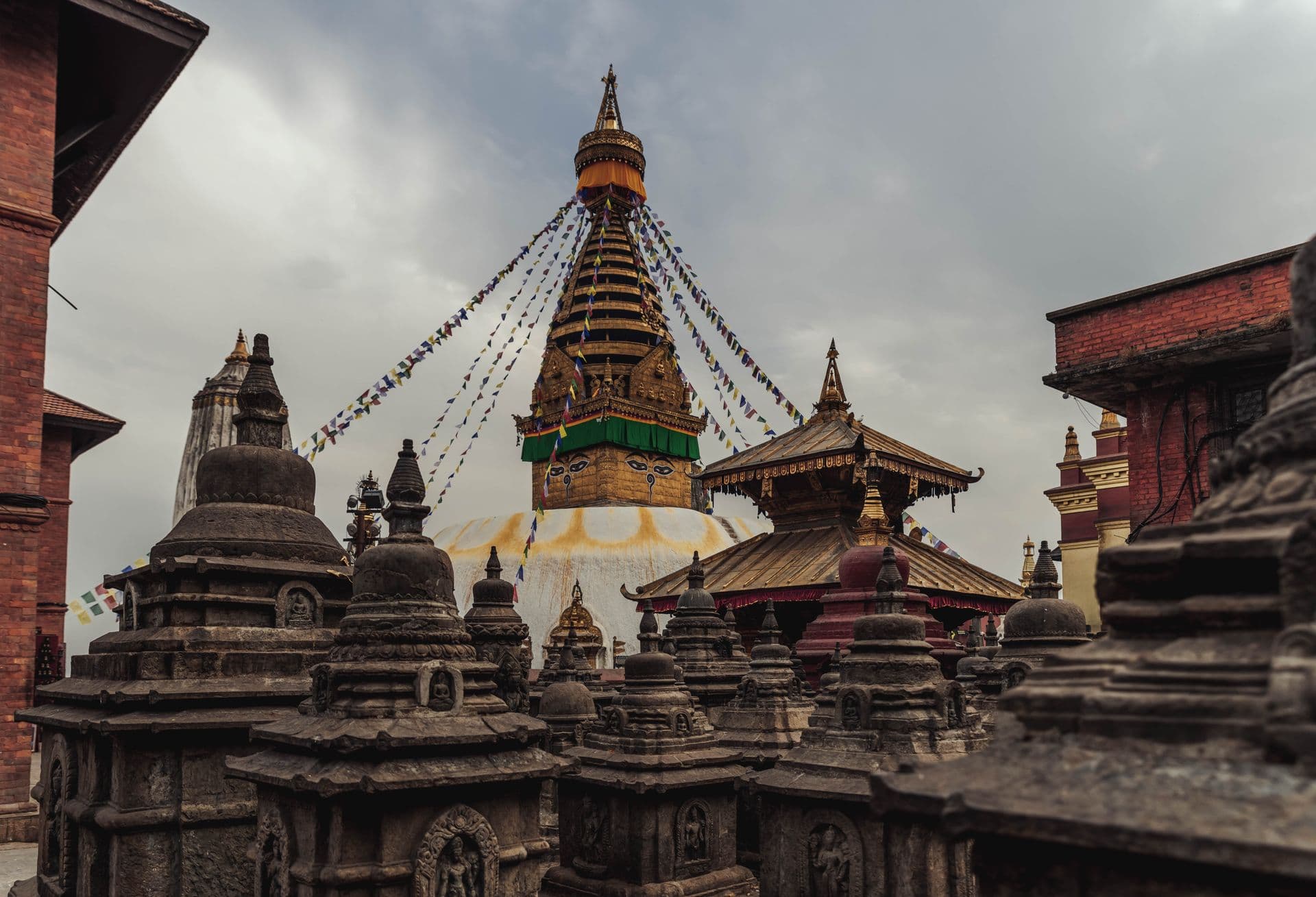
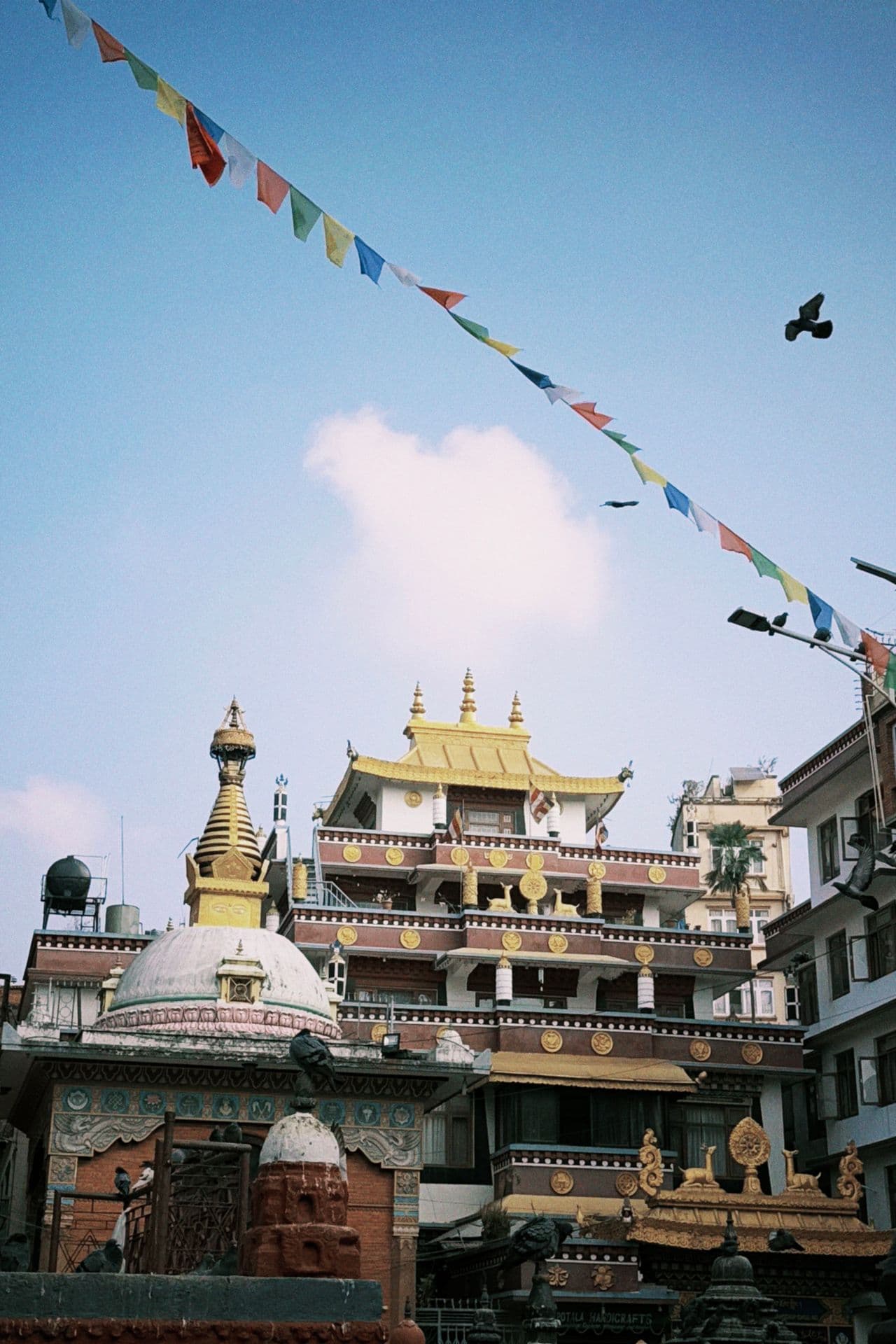
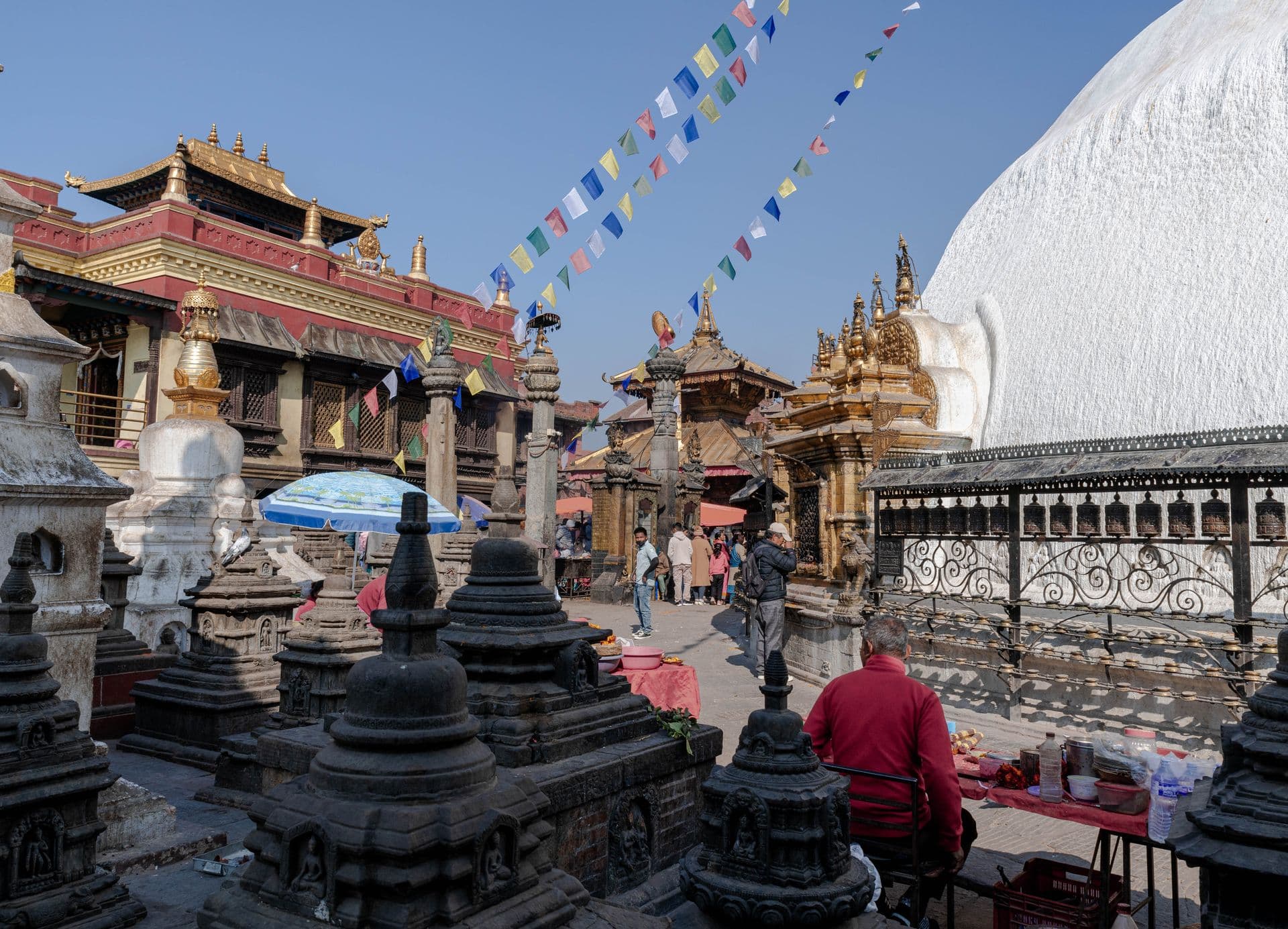
around the hill.
Most visitors see the stupa and leave. Stay a few days with us and the whole western edge of the city opens up: giant golden statues, a Vajrayogini temple on a holy river, a university museum of butterflies and birds, and the old gardens and shrines that ring the base of the hill. All of these are within a short walk or a ten-minute taxi.
a short walk away
Amideva Buddha Park
Three golden statues, each over 20 metres tall: Amitabha (Shakyamuni) in the centre holding the bowl of nectar, with Chenrezig and Guru Rinpoche beside him. Built in 2003 and a calm place to sit when the stupa is busy.
Natural History Museum
Tribhuvan University's cabinet of curiosities since 1975: more than 50,000 specimens of Nepal's plants, insects, birds and animals, including fossils. Small, old-fashioned and charming.
Swayambhu Vihara
A Newar Buddhist courtyard monastery (bahal) with carved windows and metalwork, where the valley's older Vajrayana tradition is still practised alongside the Tibetan gompas above.
Bijeshwori temple
A 1655 temple to Vajrayogini in her sky-dancer form, sacred to Hindus and Tibetan Buddhists alike, on the old pilgrim path between Swayambhu and the city. Photographing the deity is not allowed.
Shobha Bhagwati
A pagoda temple to Durga in her nine forms, busiest during Dashain. Beside it stands the memorial to the martyrs of 1941.
National Museum
Nepal's main museum in a former Rana arsenal: stone and bronze sculpture, the Buddhist art gallery and a hall of historic weapons. Closed Tuesdays; a combined ticket covers all buildings.
Balaju Water Garden
An 18th-century garden of 22 carved stone water spouts (Baisdhara), a replica of the sleeping Vishnu and a public swimming pool. Thousands bathe here on the full moon of Baisakh.
Ichangu Narayan
One of the four Narayan temples that guard the valley, in a quiet village below Nagarjun hill. Its origins are placed anywhere between the 5th and 13th century, and the walk there through fields is the point.
Kimdol and Manjushree Bazaar
The everyday Swayambhu: monastery schools, momo kitchens, tailors and tea stalls. BIA Café in Kimdol is a bookish spot for a slow coffee.
the trails.
Lagom sits in Nagarjun, named for the forested hill that rises behind Swayambhu and forms the southern lobe of Shivapuri Nagarjun National Park. Which means some of the best day hikes in the valley start almost at the door.
Carry water, start early and take a photo ID: park gates ask for one. Autumn (September to November) and spring (March to May) give the clearest skies.
pick a hill
Jamacho hike, Nagarjun
Enter at the Phulbari gate on the Ring Road and climb through pine, oak and rhododendron to Jamacho Gumba at 2,128 m, a small monastery and viewpoint where Guru Rinpoche is said to have meditated. Around 10 km return, 4 to 6 hours at an easy pace. Park entry for foreigners is around NPR 565 including tax (verify at the gate).
Chandragiri Hills
A 2.4 km cable car lifts you in about 15 minutes to 2,500 m, the Bhaleshwor Mahadev temple and a panorama from Annapurna to Everest on a clear day. Round trip for foreigners is roughly USD 22 to 23 (verify current fares and operating status).
Champadevi
A ridge walk to a 2,278 m shrine on the valley's south-west rim, with Kirtipur and the whole city below. Locals climb it on Nepali New Year.
Kirtipur old town walk
A traffic-free medieval Newar town on a hill: the Bagh Bhairab temple with its tiger god, the 1655 Uma Maheshwar pagoda at the top (1,414 m) and the Chilancho stupa. Finish with a Newari lunch, see the food section.
the city.
Seven monuments in the valley make up the Kathmandu Valley World Heritage Site, and Swayambhunath is the one you can walk to. The others are between fifteen minutes and an hour away by taxi, and the Pathao or inDrive apps will get you there for a fair fare.
Thamel, with its bookshops, bakeries and trekking stores, is half an hour on foot through the old lanes, or ten minutes by car. We are happy to plan your days with you and arrange a driver or a licensed guide.
the valley's heritage, with foreign-national entry fees as of early 2026
Kathmandu Durbar Square (Hanuman Dhoka)
The old royal palace, the Kumari's house where the living goddess appears at her window, the rebuilt Kasthamandap pavilion and the Kala Bhairab relief. Best in the late-afternoon light.
Thamel, Asan and Indra Chowk
Walk from Thamel's lanes to the Garden of Dreams, a restored 1920s neoclassical garden, then into Asan, the oldest market in the city: spices, brass, beads and the Annapurna temple. Bargain from about half the asking price.
Patan Durbar Square
The most coherent of the three squares: the stone Krishna Mandir of 1637, the sunken royal bath of Sundari Chowk and the Patan Museum, one of the best in South Asia. Walk north to the Golden Temple (Hiranya Varna Mahavihar) and its gilded courtyard.
Boudhanath
One of the largest stupas in the world and the heart of Tibetan Kathmandu, ringed by some fifty monasteries. Go at dusk, when the butter lamps are lit and hundreds of people walk the kora, then eat on a rooftop above the dome.
Pashupatinath
Nepal's holiest Shiva temple on the Bagmati river. Non-Hindus cannot enter the main shrine but can watch the dawn rituals and the evening aarti from across the river. Cremations take place on the ghats; be discreet.
Bhaktapur
A whole medieval city for one ticket: the 55-Window Palace, the five-tiered Nyatapola temple, the pottery square and the juju dhau, the famous "king of yoghurts" made in clay bowls. Give it a full day.
Changu Narayan
The oldest temple in the valley on a ridge beyond Bhaktapur, with 5th-century inscriptions and some of the finest early stone carving in Nepal. Pair it with Bhaktapur, and consider sleeping at Nagarkot for a Himalayan sunrise.
Photos: Sufe (CC BY-SA 4.0), Subhashish Panigrahi (CC BY-SA 4.0)
the food.
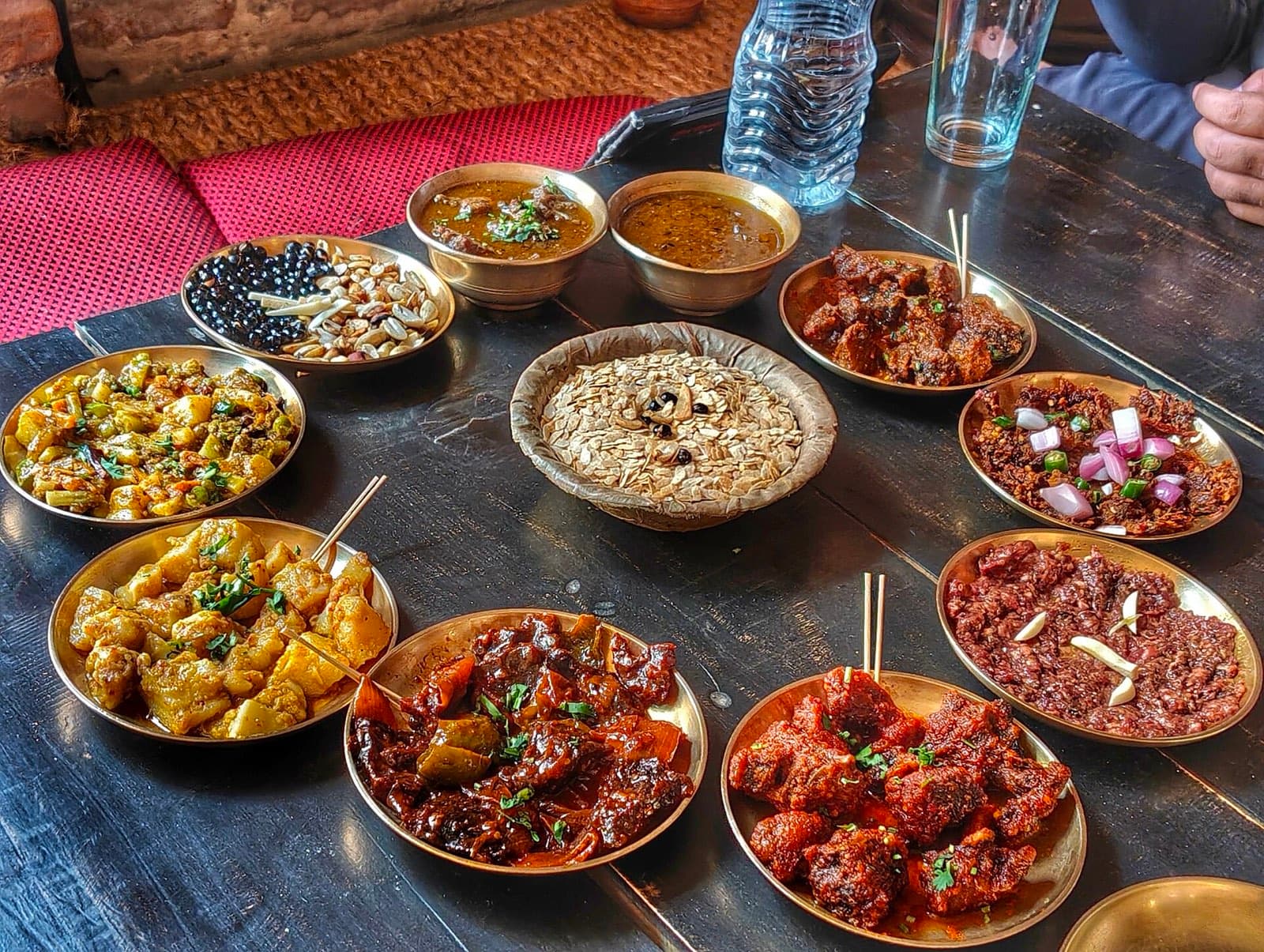
Start with momo and dal bhat, then go deeper. The Newars, the valley's original people, have one of the great unsung cuisines of Asia: smoky, spiced, built around beaten rice and eaten with a glass of chhyang (rice beer) or aila (rice spirit). Kirtipur and Patan are the places for it, and both are a short ride away.
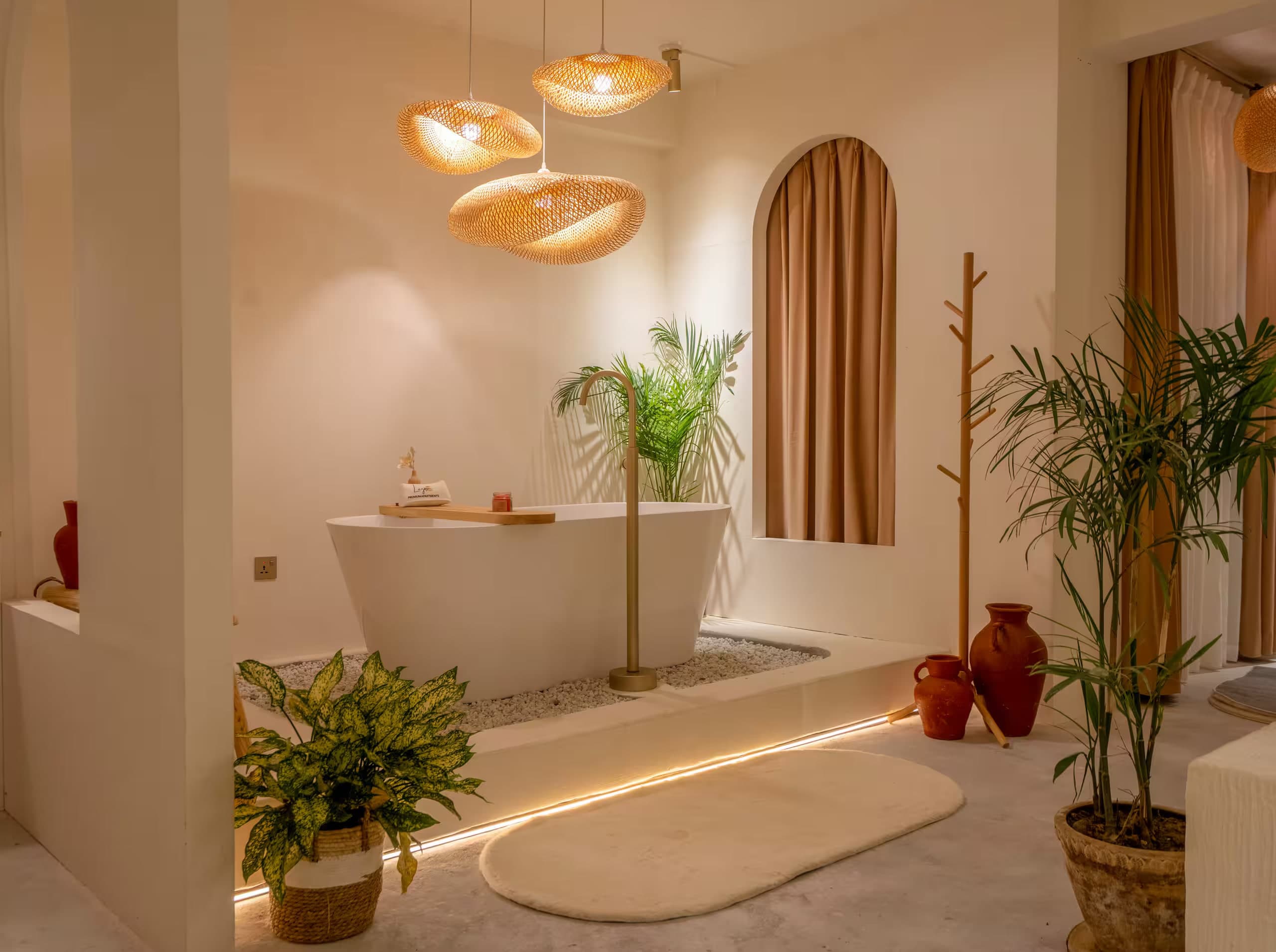
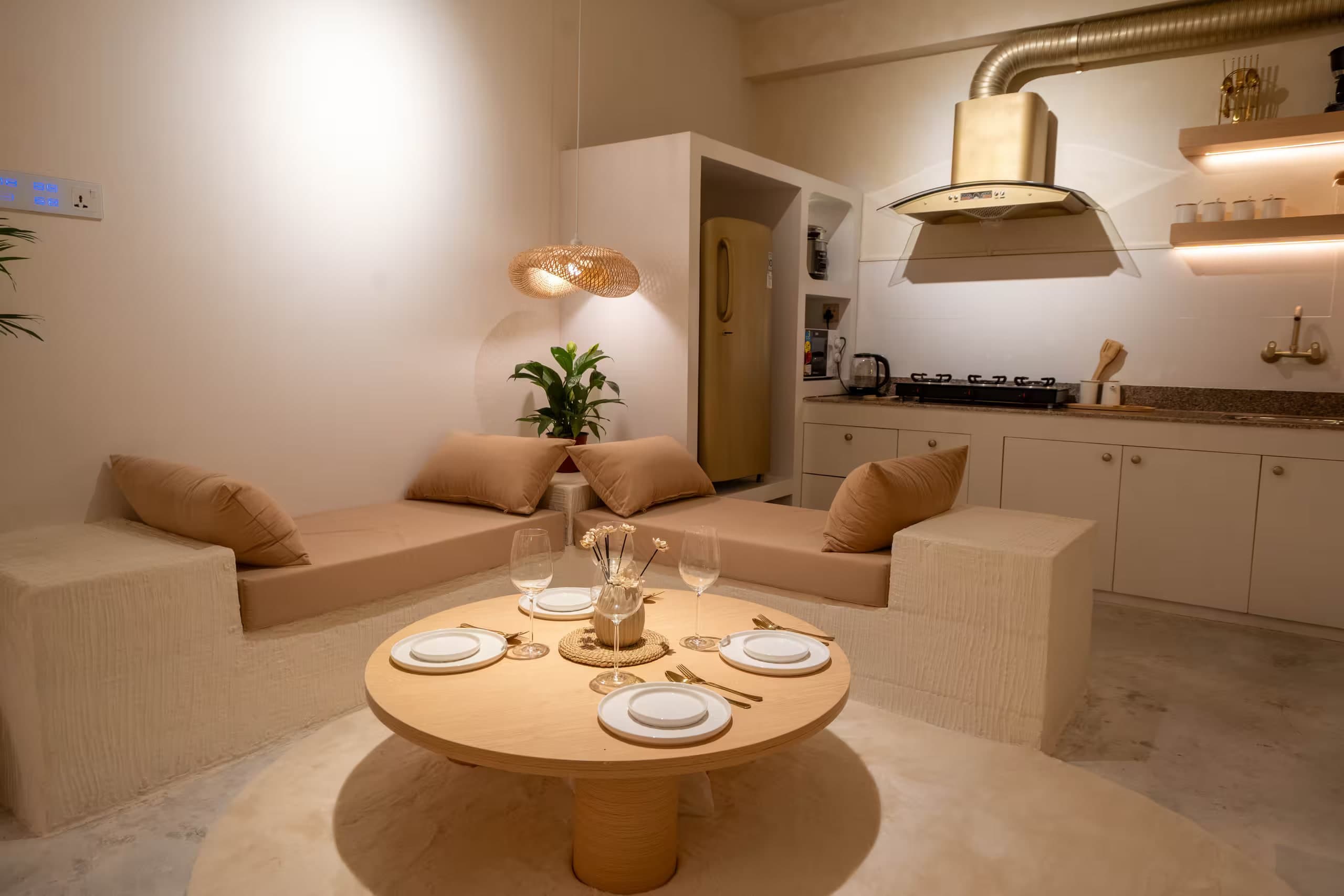
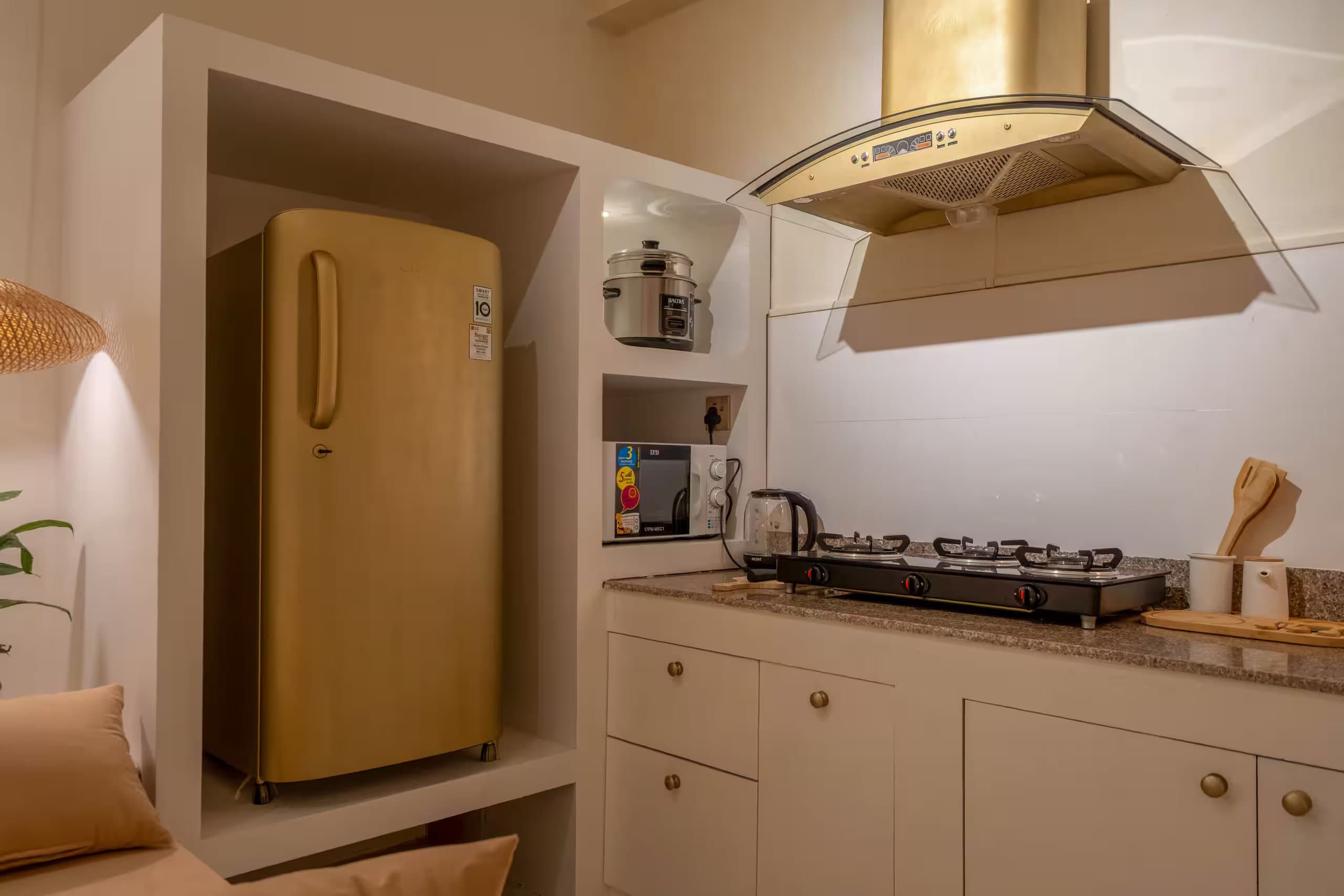
Back at Lagom, your own kitchen is fully equipped for a slow breakfast, and the tea and coffee are on us.
what to order
Momo
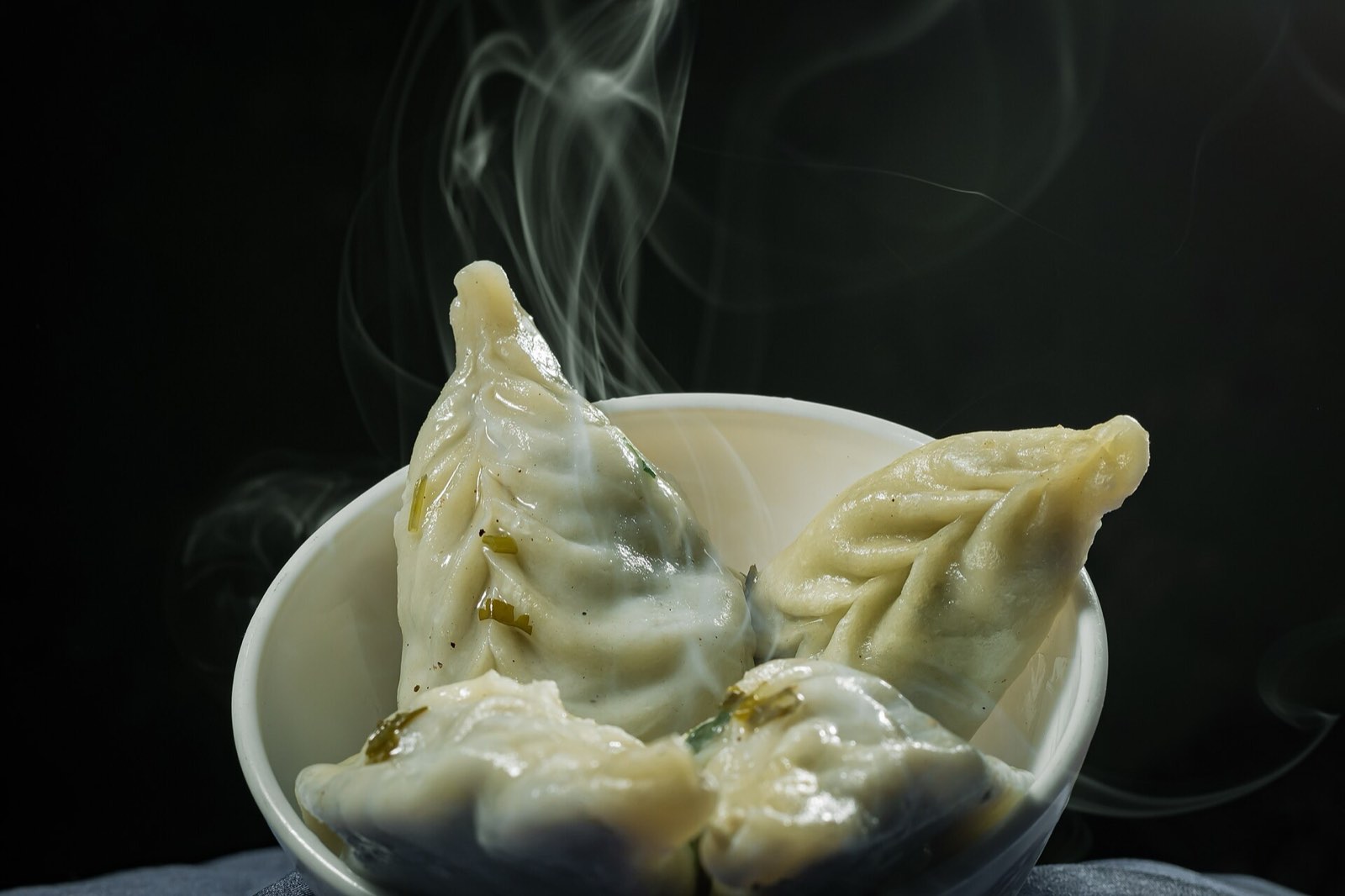
Steamed dumplings of buffalo, chicken or vegetables with a tomato-sesame achar. Try jhol momo, served in a warm spiced broth, and kothey, pan-fried.
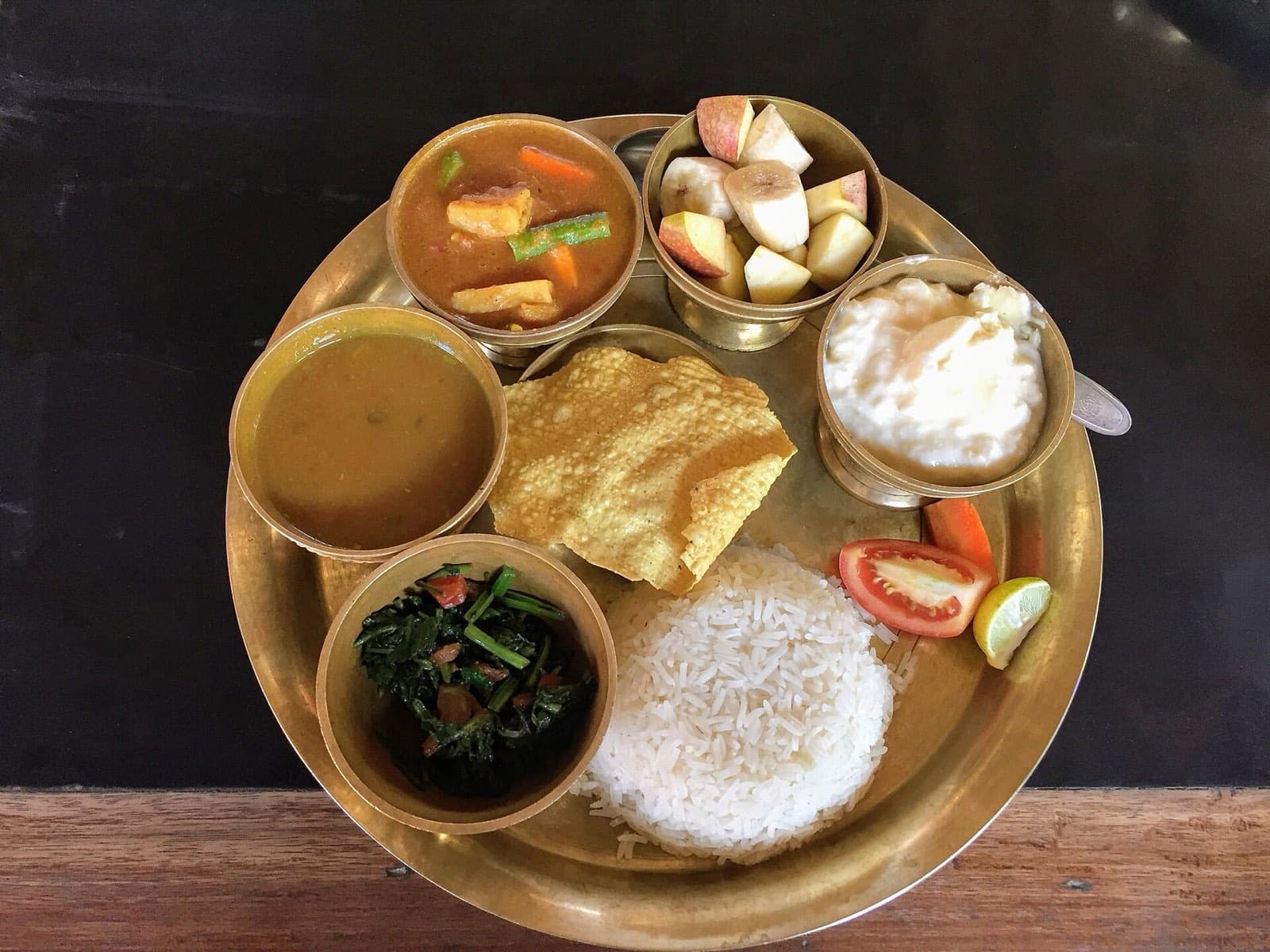
Dal bhat and the Thakali set
Rice, lentil soup, greens, pickle and curry, refilled until you surrender. The Thakali version from Mustang adds buckwheat bread, ghee and slow-cooked mutton.
Samay baji
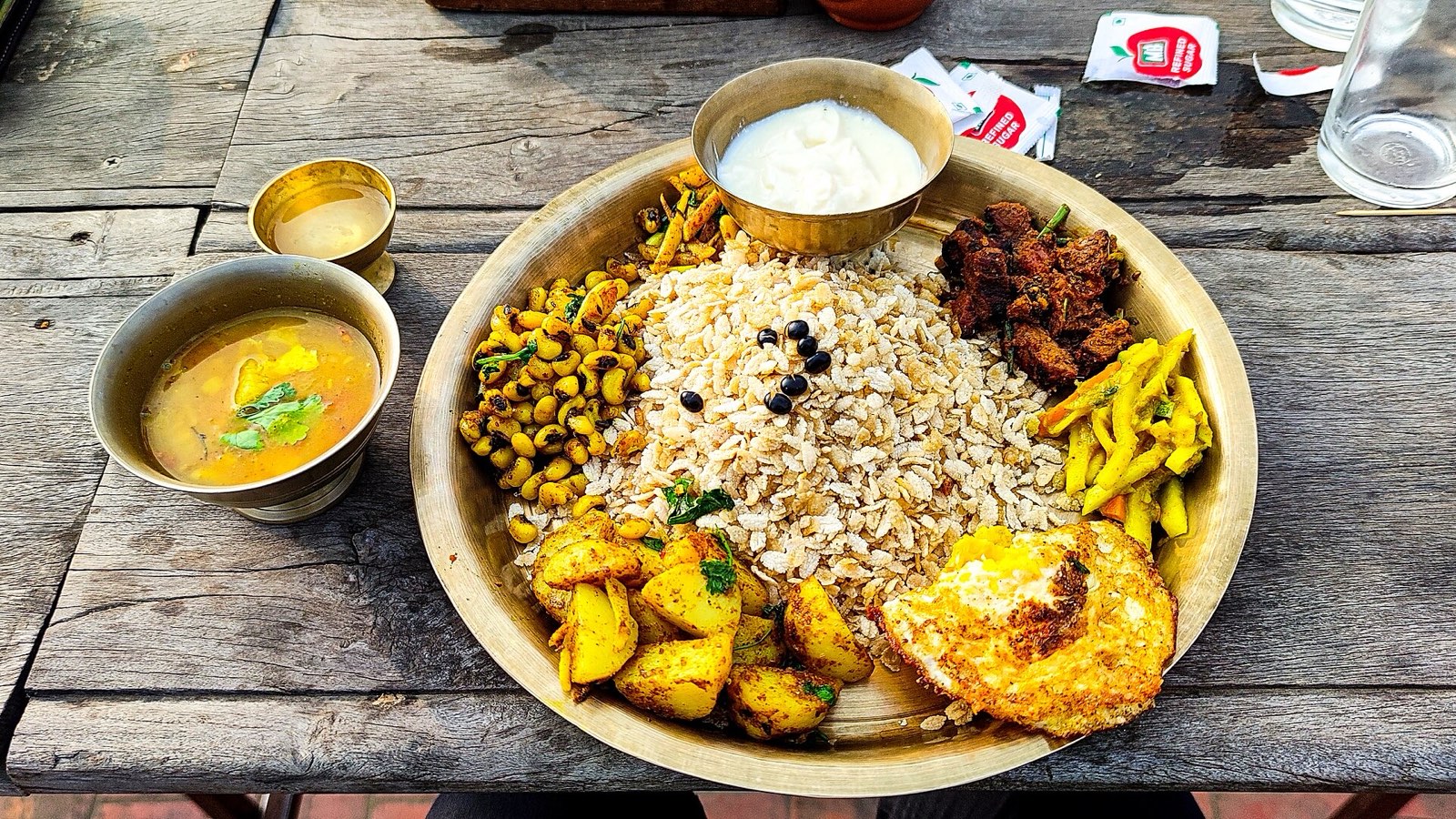
The Newari festival platter: beaten rice (chiura), choila, black soybeans, boiled egg, spiced potato, pickled radish and a bara on top.
Choila
Grilled buffalo (or chicken, or duck) tossed with mustard oil, garlic, ginger, chilli and fenugreek. Haku choila is the smoky black version.
Bara and chatamari
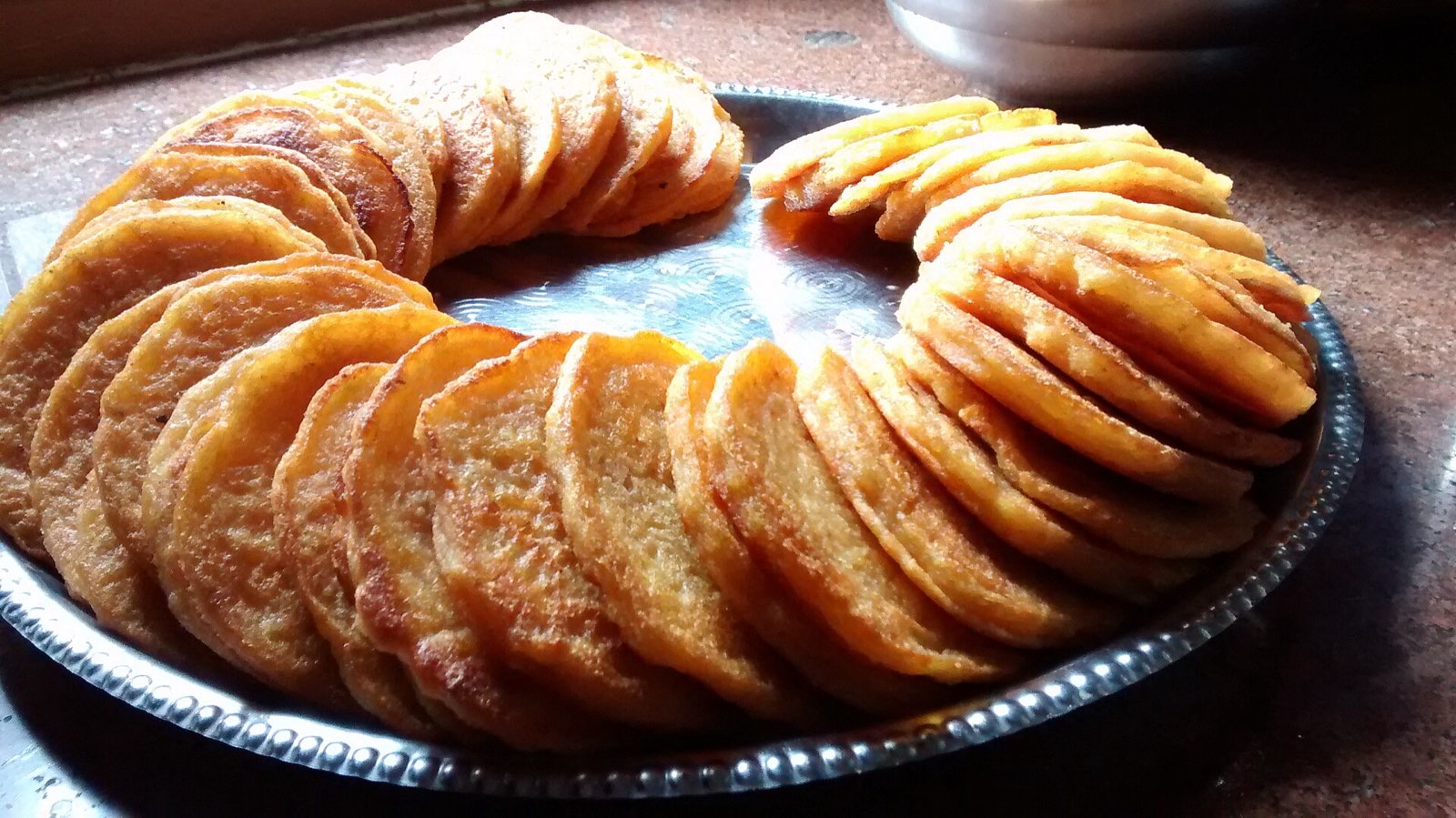
Bara (wo) is a savoury lentil pancake, often with an egg or minced meat cooked in. Chatamari is a thin rice-flour crepe with toppings, the "Newari pizza".
Yomari
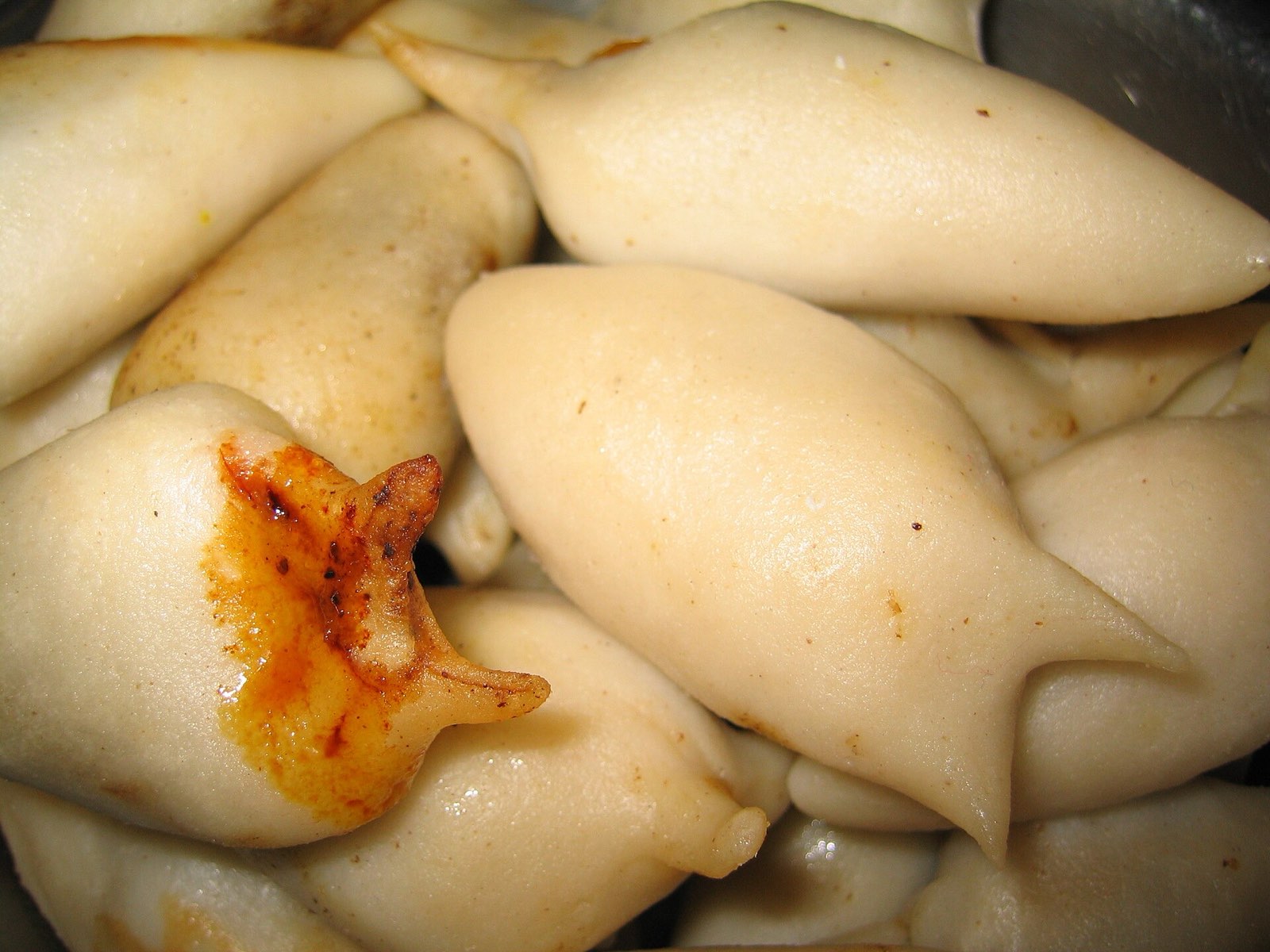
A steamed rice-flour dumpling shaped like a fig and filled with molasses and sesame, or sweet khuwa. Made for Yomari Punhi in December, but Kirtipur serves it all year.
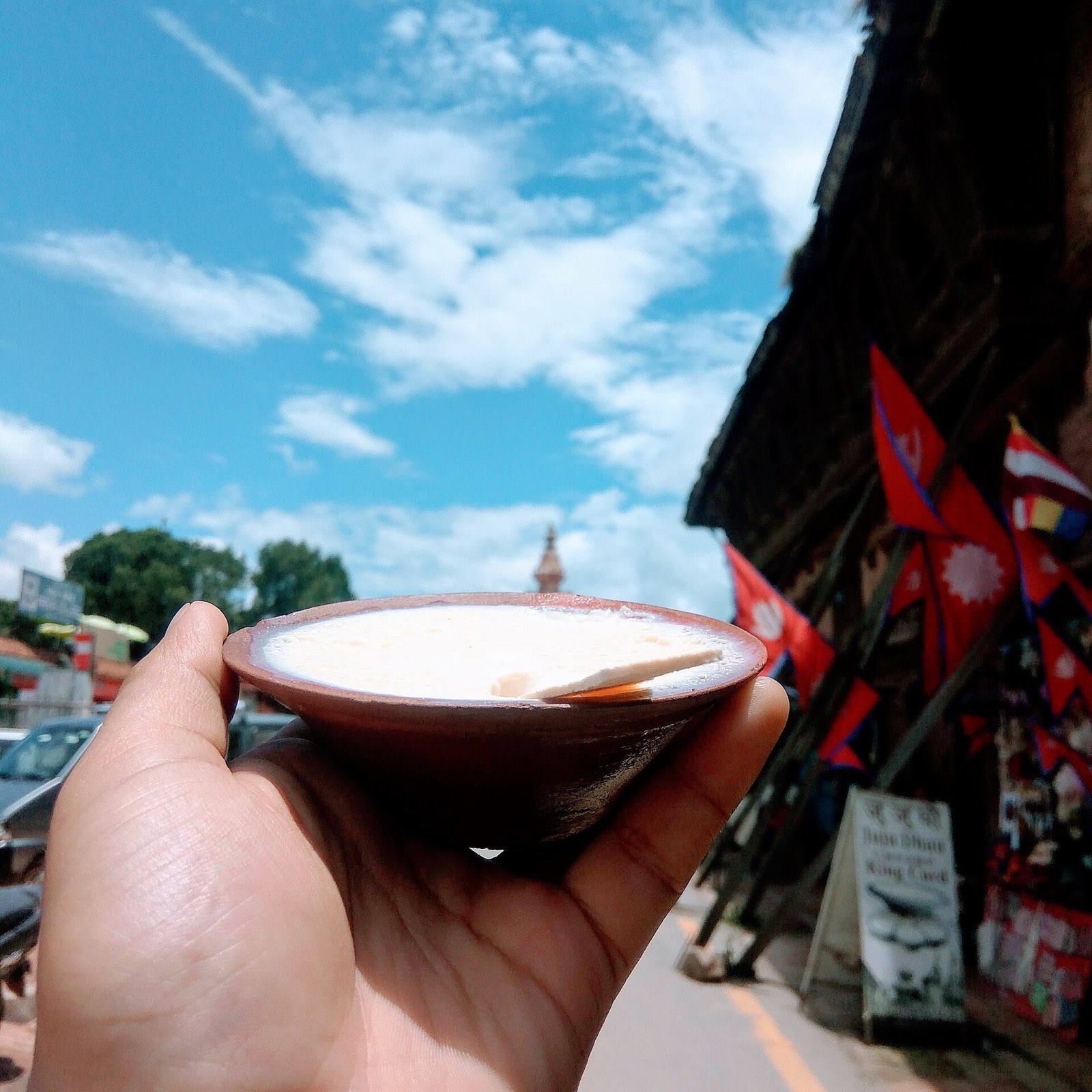
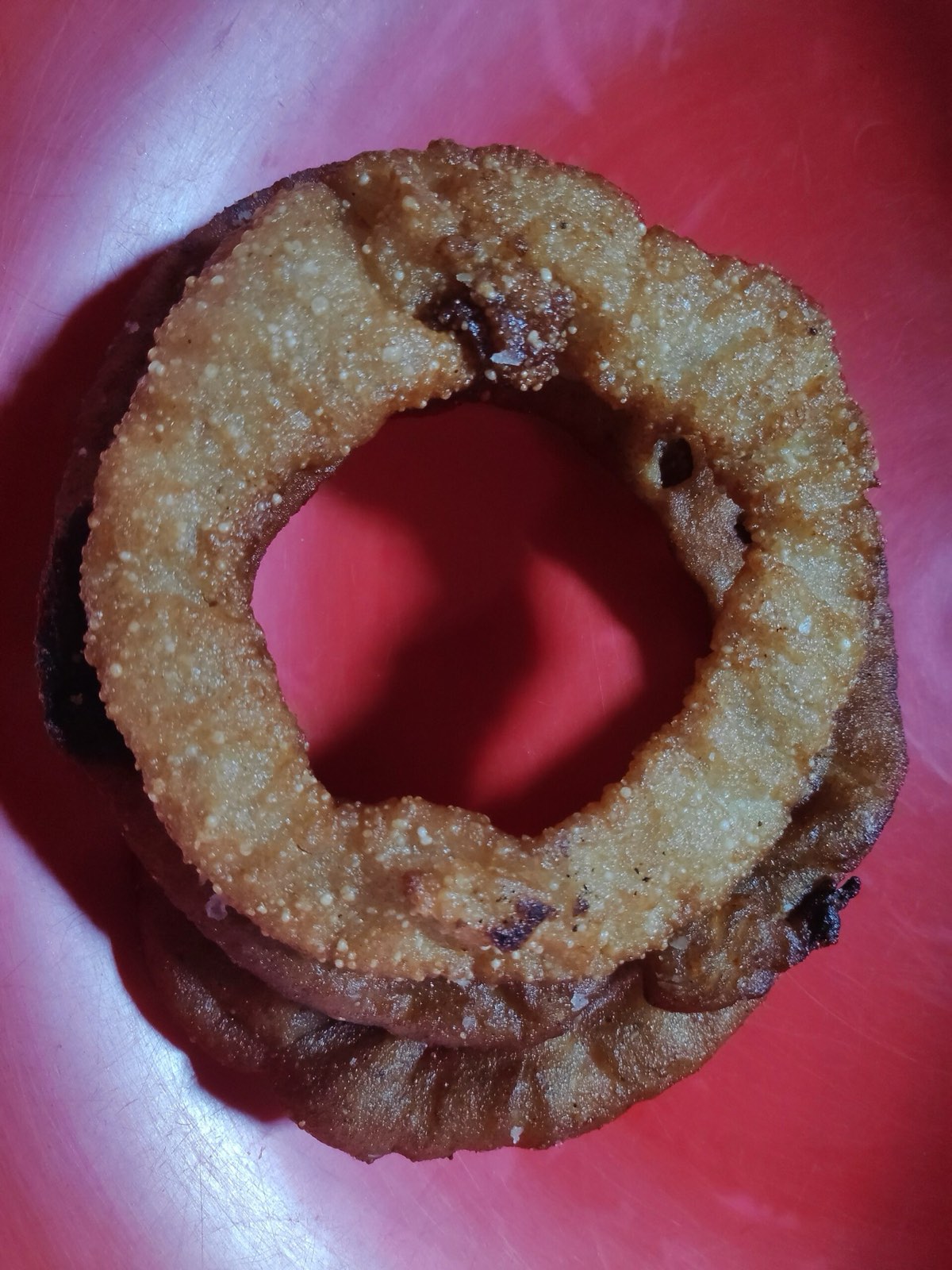
Juju dhau, sel roti and lhaphing
Bhaktapur's thick clay-pot yoghurt; the ring-shaped rice bread fried at festivals; and the cold, chilli-laced mung-bean noodles sold in Boudha's alleys.
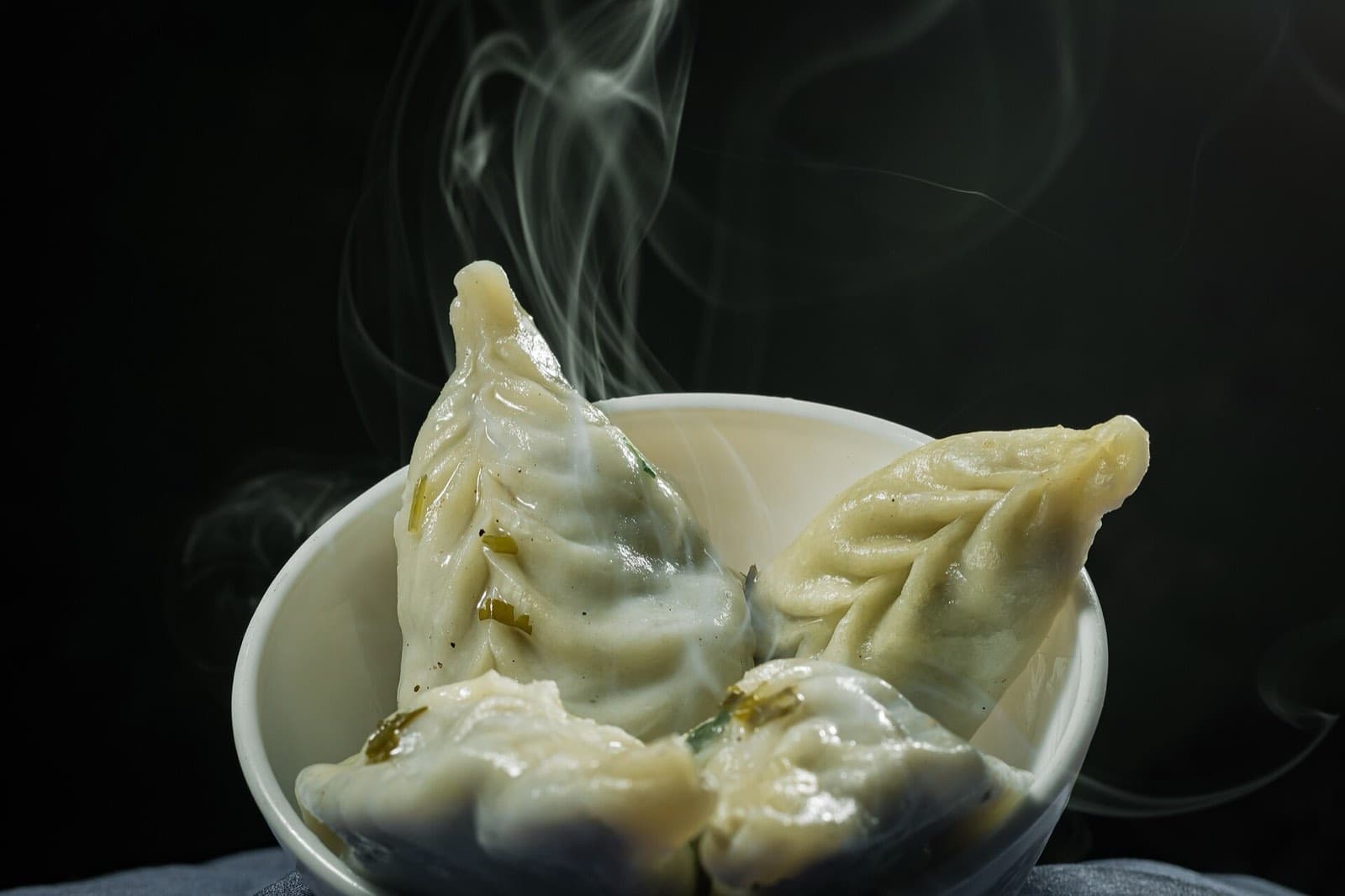
Momo, straight from the steamer 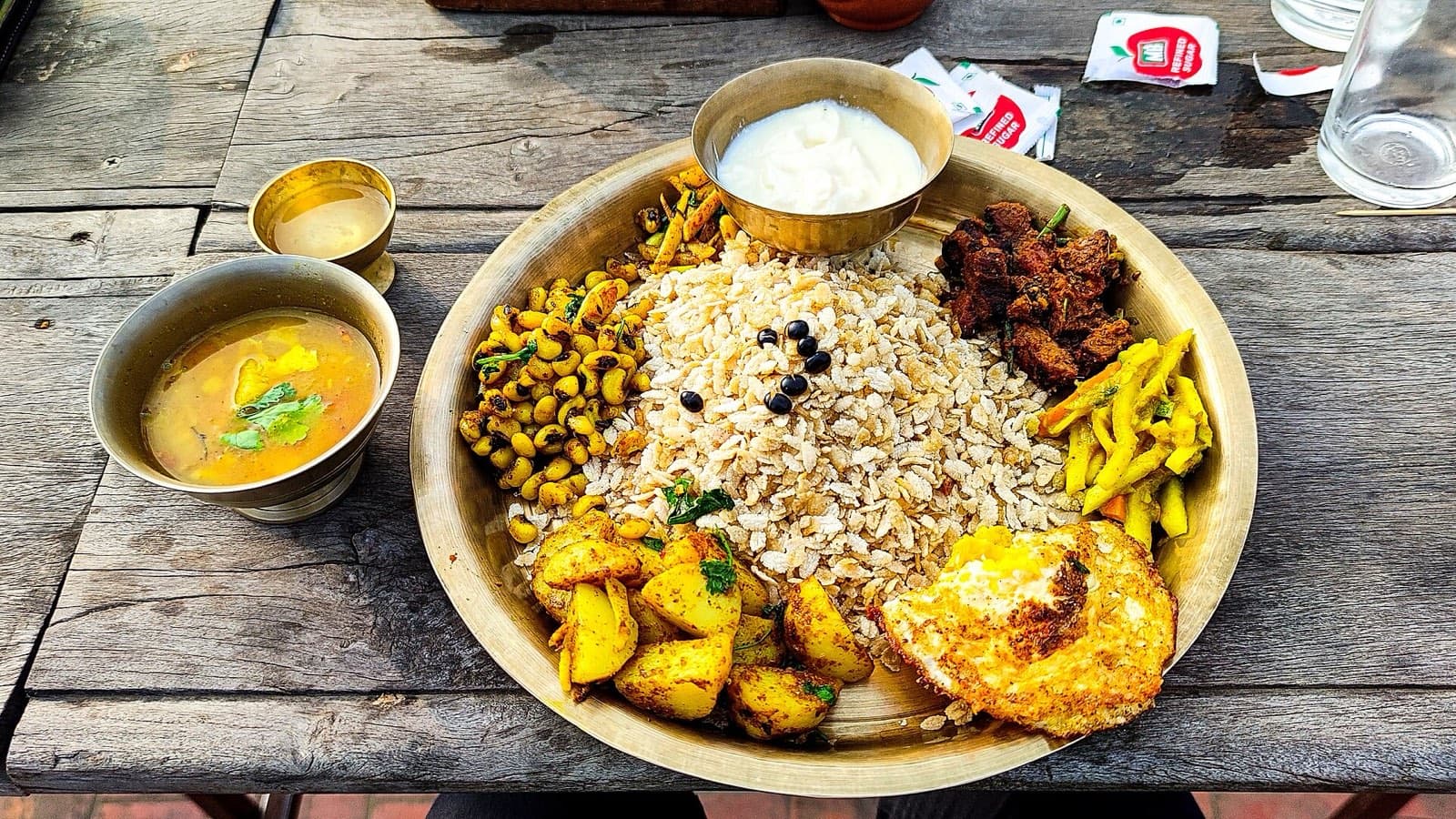
Samay baji on a brass plate 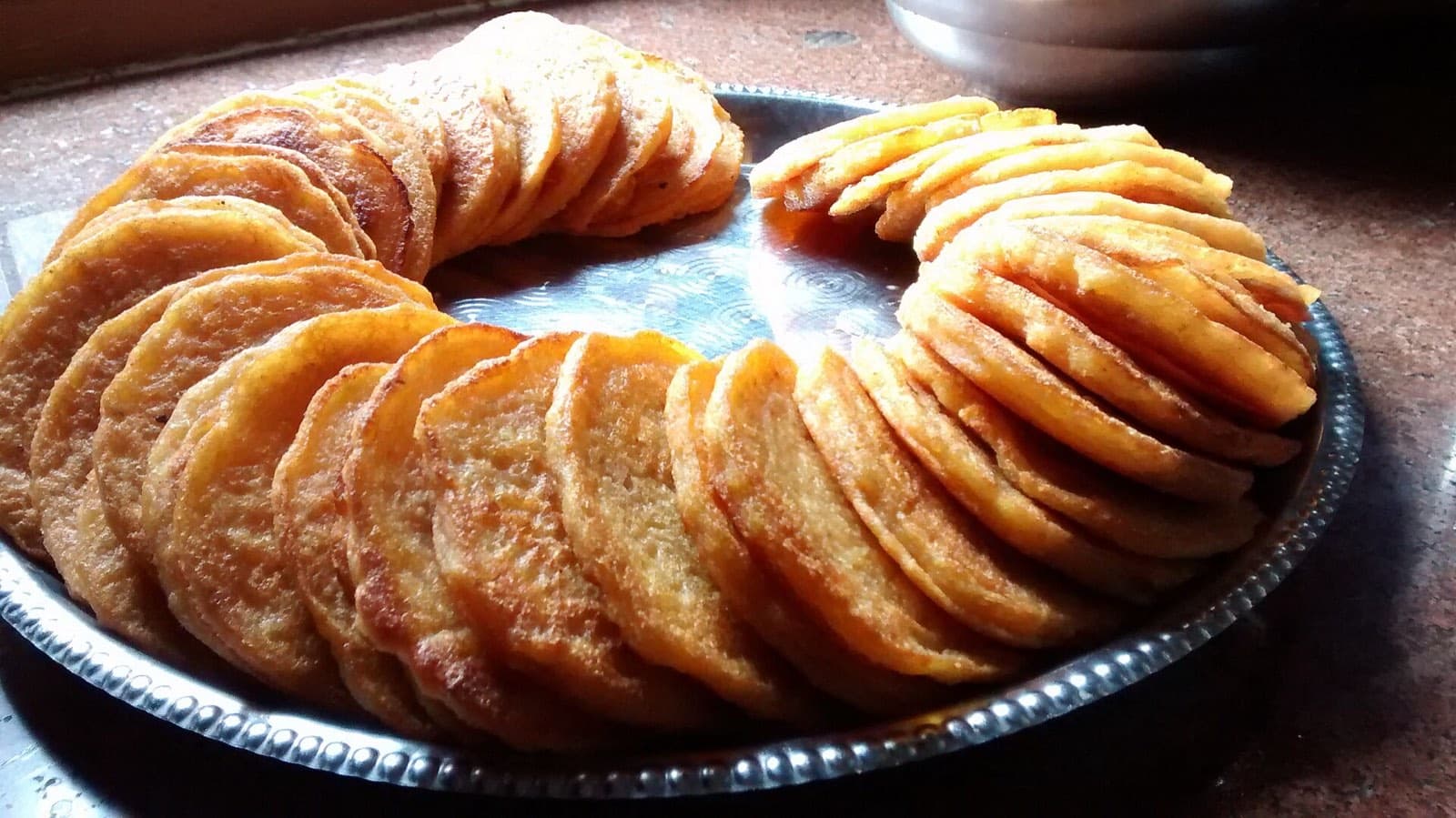
Wo, the Newari lentil pancake 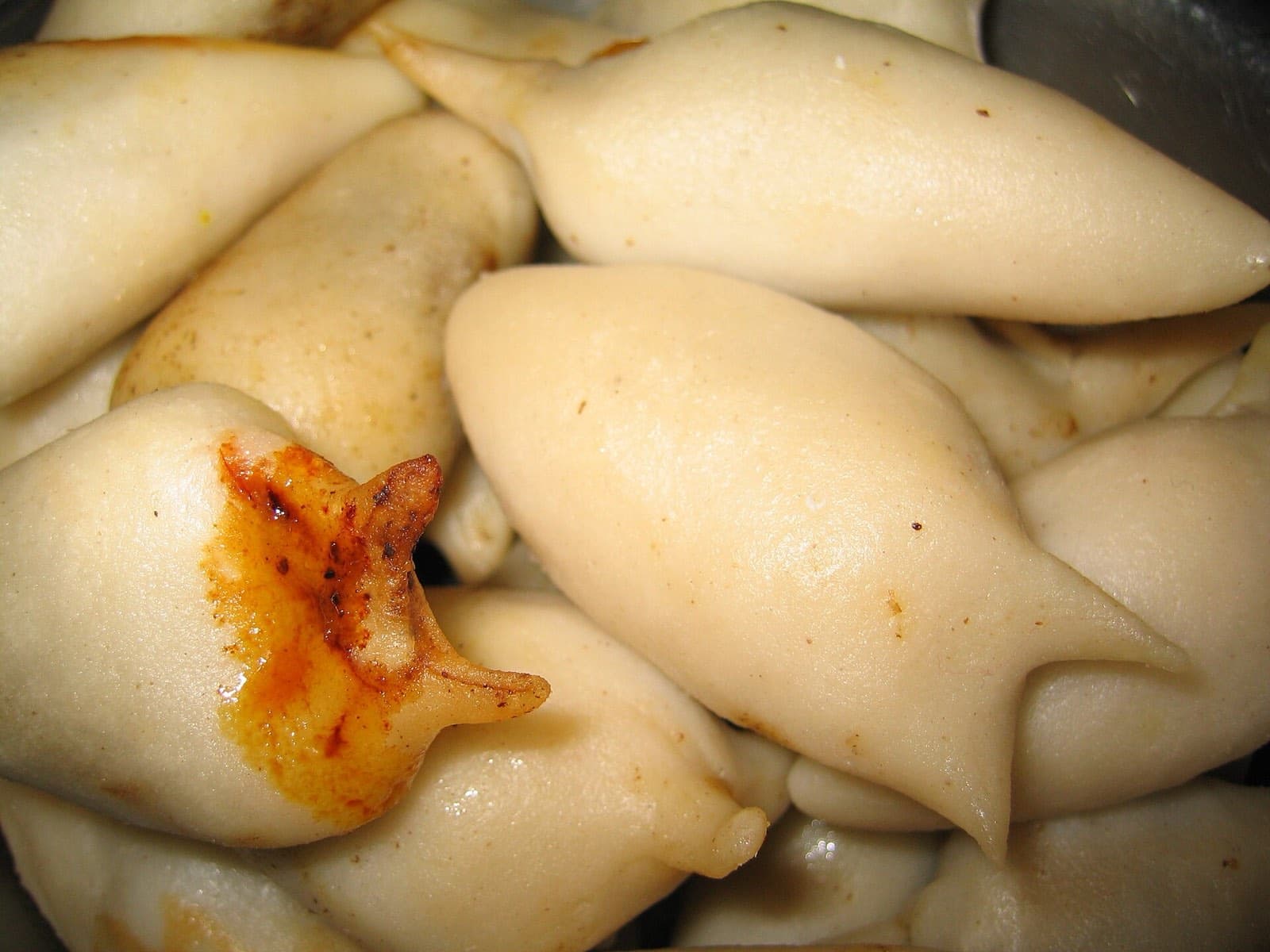
Yomari, steamed for Yomari Punhi 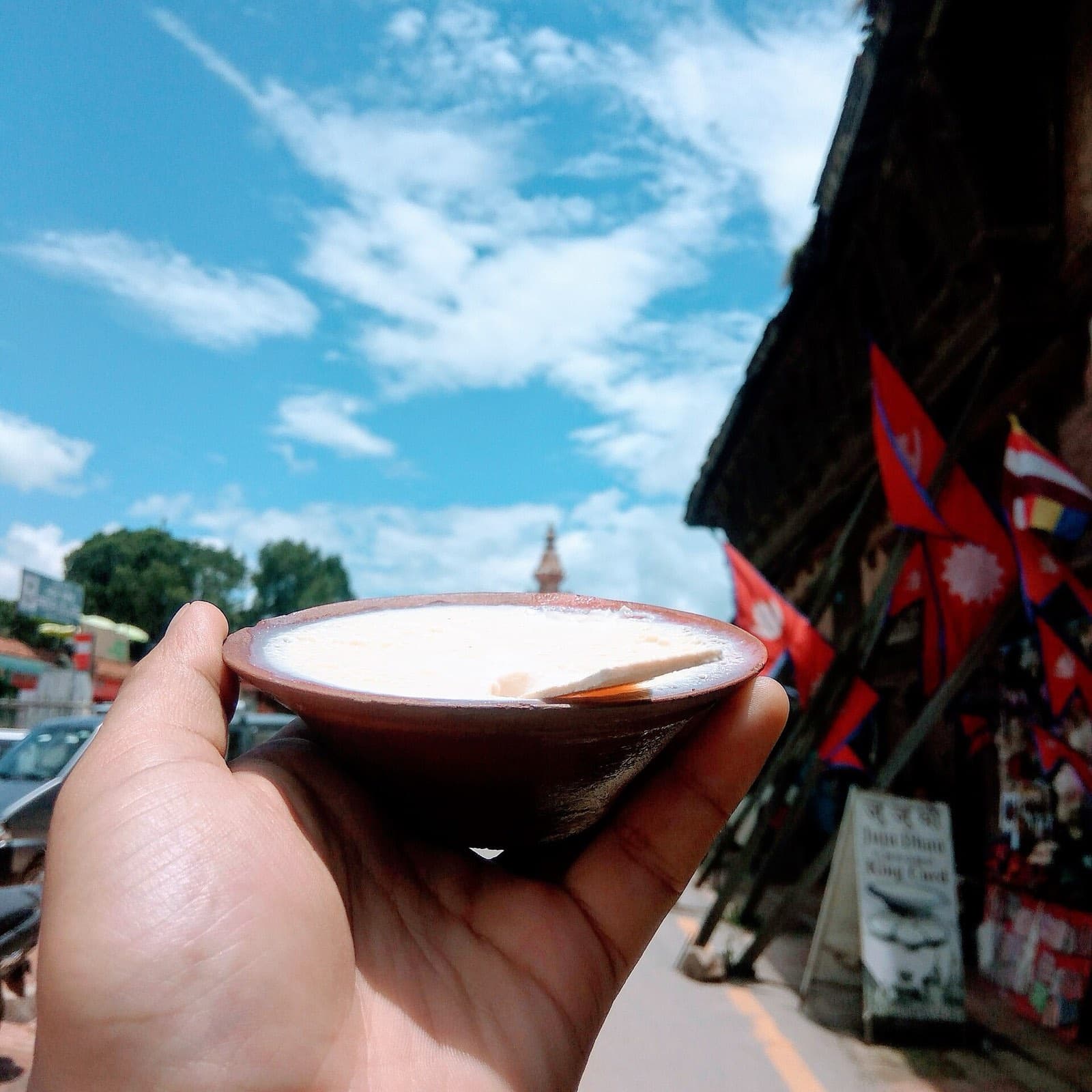
Juju dhau in its clay bowl, Bhaktapur 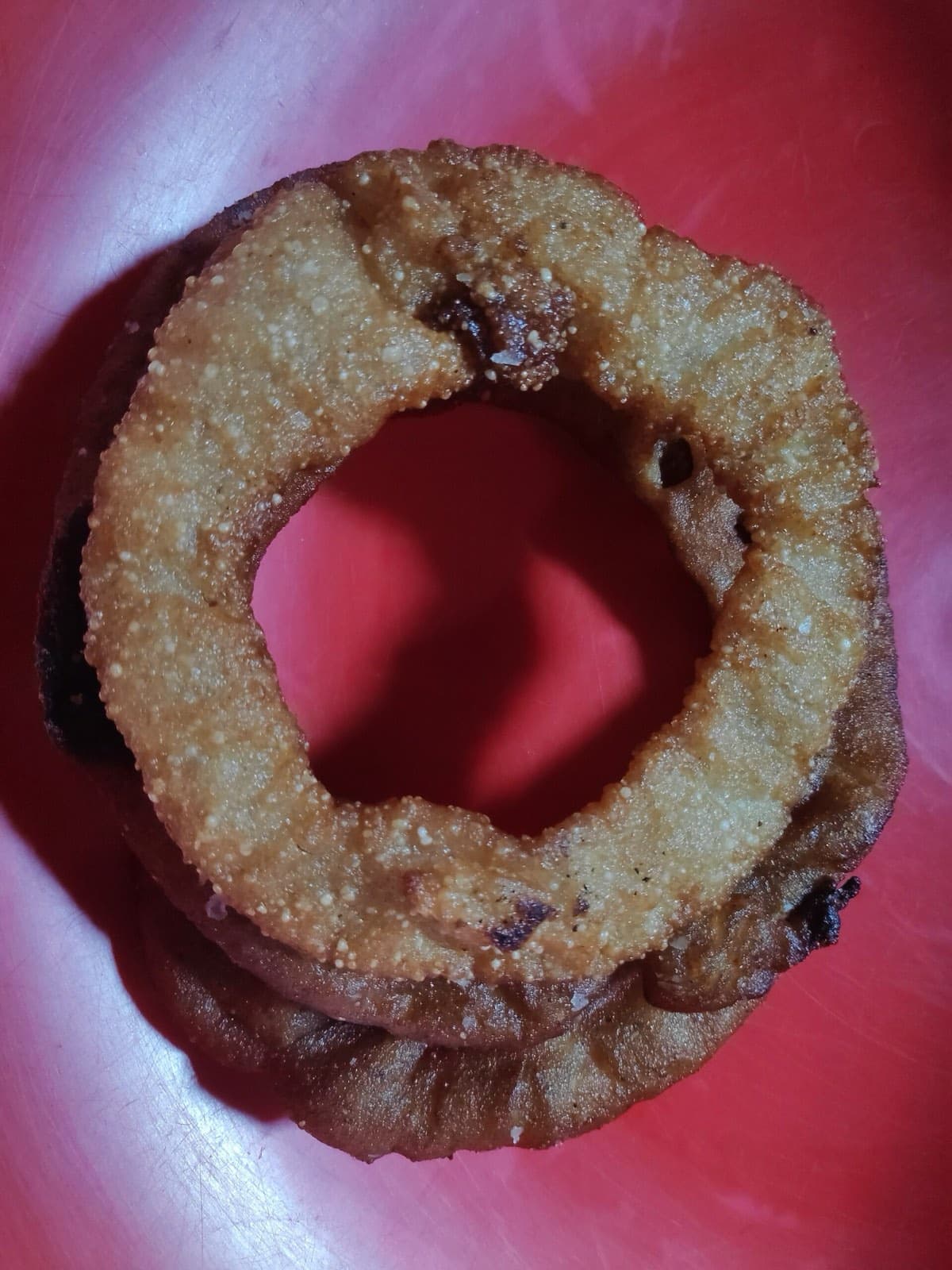
Sel roti, the festival bread
Photos: Tapas Kumar Halder (CC BY-SA 4.0), Sherin (CC BY-SA 4.0), Iscream123 (CC BY-SA 4.0), Ritesh Man Tamrakar (CC BY 2.0), SHnehaa (CC BY-SA 4.0), Gaurav Dhwaj Khadka (CC BY-SA 4.0) via Wikimedia Commons.
where to eat
Nirvana Café & Restaurant
Rooftop breakfast with the stupa in view, good momo; the local favourite for a first morning.
Swayambhu Coffee House
Cheap, cheerful and honest Nepali and Tibetan plates after the climb.
Cafe De Stupa and Lisa-T
Two tiny terrace cafés tucked behind the stupa for tea, laphing and the sunset.
BIA Café
Books on every wall, a small garden and the quietest coffee in the neighbourhood.
Newa Lahana
A community-run Newari kitchen and open museum: more than fifty dishes cooked by the women of the town, eaten on straw mats upstairs. Order mixed wo, choila, sukuti and yomari. Nepali Times review
Sasa: Twa
A traditional Newar household turned restaurant. People cross the valley for its buff choila and khaja set; expect a wait.
Honacha
The oldest Newari eatery on Patan Durbar Square, a hundred years of choila, bara and chiura on low stools.
Boudha rooftops
Thukpa, thenthuk, tingmo and butter tea above the stupa at dusk.
Momo cooking class
Nepal Cooking School and Kathmandu Cooking Academy both run short classes, some with a market walk first, from roughly USD 15 to 20 per person.
the calendar.
Swayambhu is a living temple, and the hill fills on festival days. Dates follow the lunar calendar and shift every year; these are for 2026.
- Feb / MarLosar
Tibetan New Year. Monasteries on the hill hold masked dances and pujas; the fifteenth night ends with thousands of butter lamps.
- Mid-AprilNepali New Year and Bisket Jatra
Bhaktapur drags its chariots and raises a 25 m pole; locals hike Champadevi and bathe at Balaju's 22 spouts.
- 1 MayBuddha Jayanti
The Buddha's birth, enlightenment and passing on the full moon of Baisakh. Swayambhunath is the heart of it: prayer flags, butter lamps, chanting and a procession around the hill from before dawn.
- Aug / SepGunla
The Newar Buddhist holy month. Every morning before sunrise, neighbourhood bands play devotional music up the steps to the stupa.
- 25 SepIndra Jatra
Eight days of masked dances, the raising of the lingo pole and the Kumari's chariot through Kathmandu Durbar Square.
- 19 to 23 OctDashain
The biggest Hindu festival of the year. Kites, swings, family feasts and offerings at Shobha Bhagwati and the other Shakti temples. Many shops close.
- 9 to 12 NovTihar
The festival of lights: oil lamps and marigold garlands on every house, dogs and cows honoured, sel roti frying everywhere.
- DecYomari Punhi
The full moon after the rice harvest, when Newar families steam yomari. Kirtipur's kitchens make them by the hundred.
good to know.
Getting around
Pathao and inDrive (ride-hailing apps) work well in Kathmandu and need a local SIM to register; a car to Thamel or Patan is a few hundred rupees. We also arrange drivers for day trips.
Money and SIM
Carry small notes of Nepali rupees for taxis, temples and tea. Ncell and Nepal Telecom counters at the airport arrivals hall sell tourist SIMs against your passport.
Entry fees
Heritage sites charge foreign nationals separately from SAARC citizens, and prices rise every couple of years. Treat the figures on this page as a guide and check at the ticket counter.
Temple manners
Walk clockwise around stupas and prayer wheels. Cover shoulders and knees, remove shoes where others do, and ask before photographing people or deities.
Monkeys and crows
On the hill, keep snacks zipped away and hold on to glasses, phones and hats. Do not feed the monkeys.
Water and timing
Drink bottled or filtered water; yours is free at Lagom. Start temple visits at dawn or late afternoon for light, air and fewer people.
- UNESCO: Kathmandu Valley World Heritage Site
- Wikipedia: Swayambhunath
- The Longest Way Home: Swayambhunath guide
- In Your Pocket: the UNESCO sites of the Kathmandu Valley
- Best Heritage Tour: monasteries around Swayambhunath
- Atlas Obscura: Amideva Buddha Park
- Natural History Museum of Nepal
- Nepal Traveller: Bijeshwori temple
- Nepal Traveller: Jamacho hike
- Nepal Traveller: Chandragiri cable car guide
- Wikipedia: Kirtipur
- Nepali Times: Newa Lahana
- Onlinekhabar: where to eat choila in Kathmandu
- Lonely Planet: best day trips from Kathmandu
- In Your Pocket: getting around Kathmandu
- Tripadvisor: restaurants near Swayambhunath